Why visit the Atacama
Why visit the Atacama
The driest desert on earth
The Atacama is the driest non-polar desert in the world — some weather stations have never recorded rain, and parts of it stood in for Mars in scientists' tests. Trapped between the Andes and the coastal range in a double rain shadow, it's a landscape of salt, stone and volcanoes unlike anywhere else, with the oasis town of San Pedro de Atacama at its heart.
Otherworldly by day
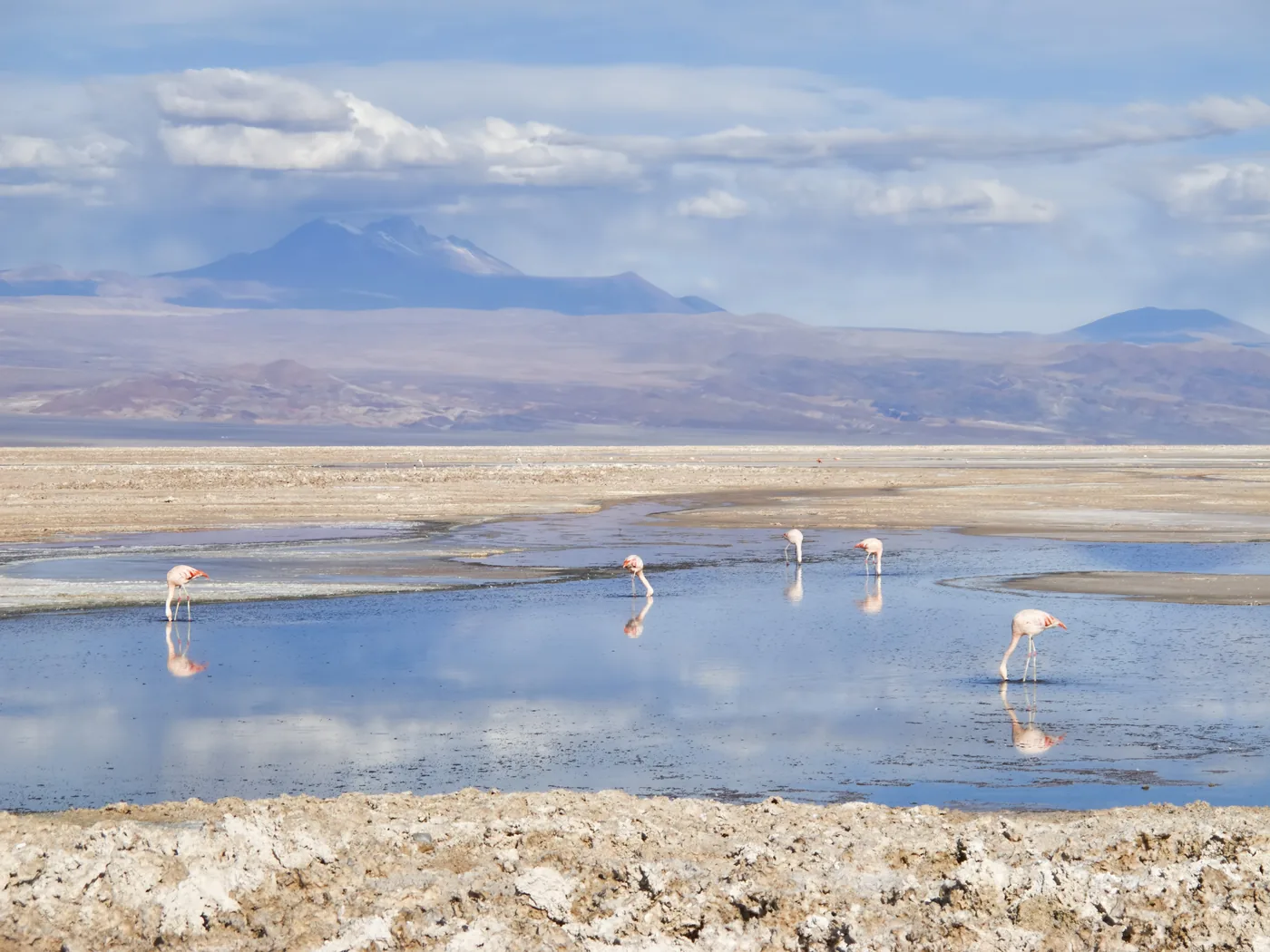
The set-pieces come one after another: the El Tatio geysers steaming at dawn in one of the highest geothermal fields on earth; the wind-carved Valle de la Luna; the vast Salar de Atacama; and high altiplanic lagoons like Miscanti and Miñique, mirror-still beneath the volcanoes and ringed with flamingos. Few deserts pack so much drama into so small a base.
The clearest skies in the world
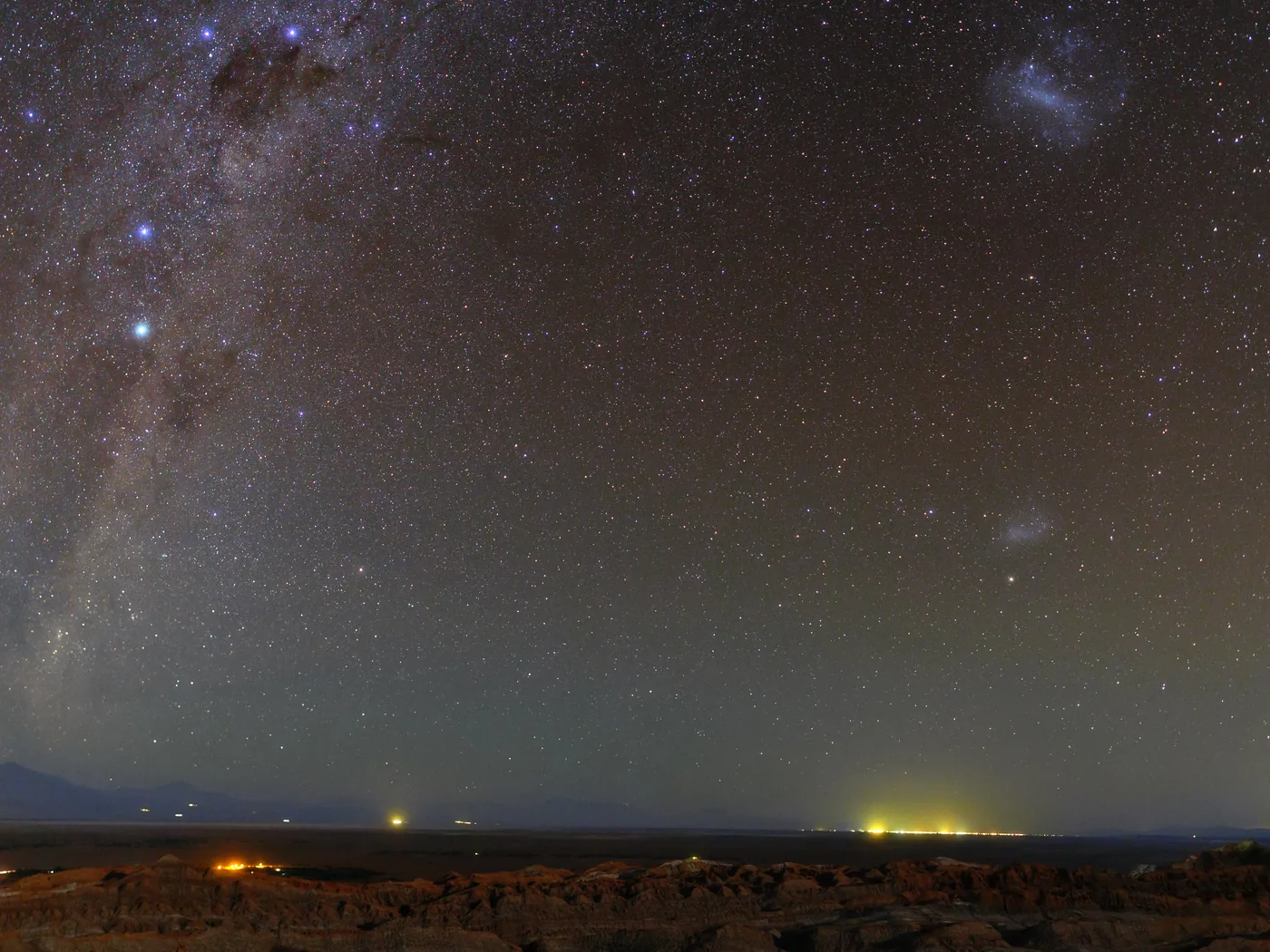
High, bone-dry and almost free of light pollution, the Atacama has more than 200 cloudless nights a year — which is why it hosts great observatories like ALMA, and why a stargazing night here is among the best on the planet. The Milky Way overhead is a sight people remember for life.
What to see in the Atacama
What to see in the Atacama
San Pedro is the launchpad for a string of unforgettable half- and full-day trips. These are the ones to build your days around.
- El Tatio
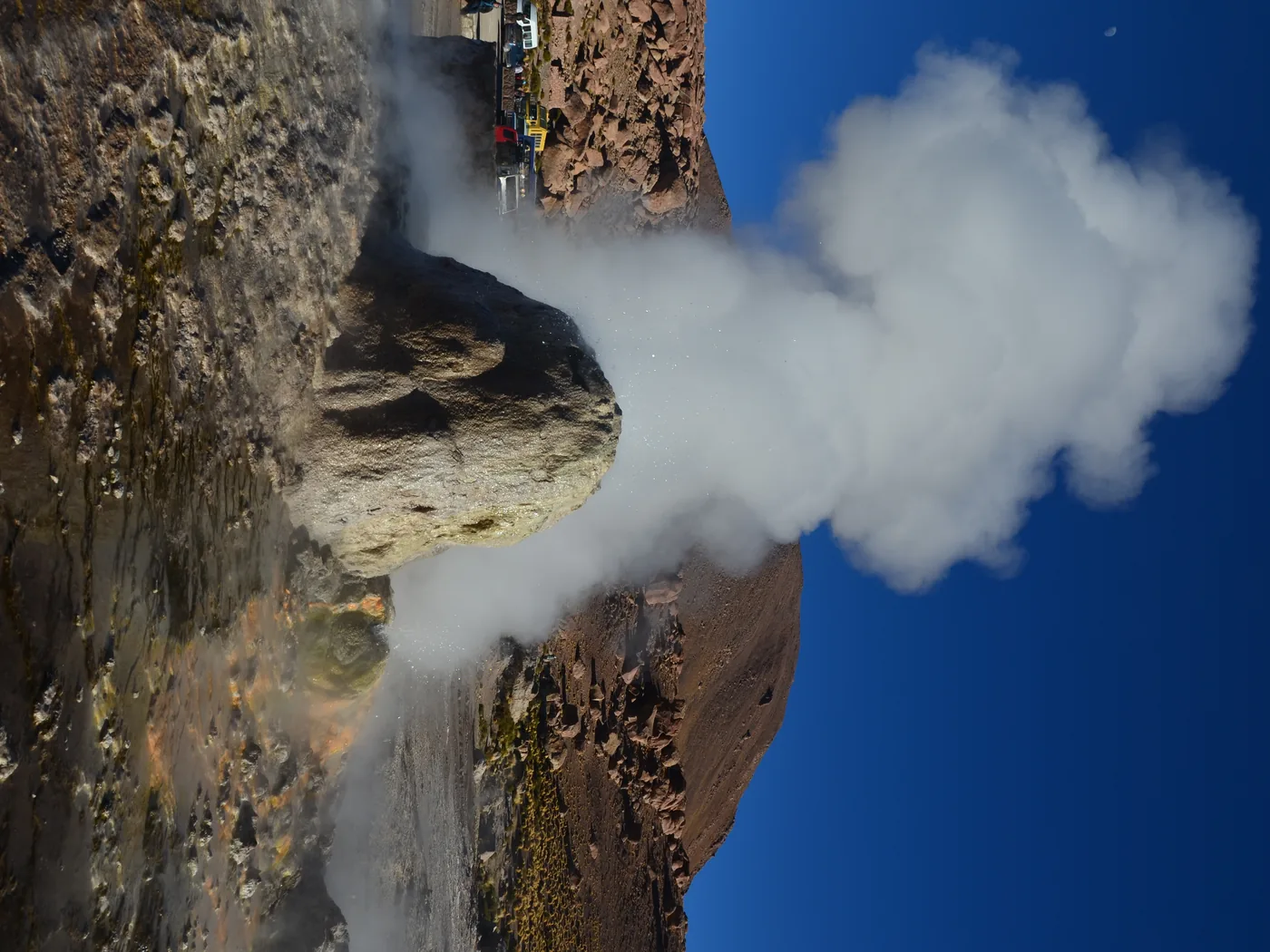
The geysers at dawn
One of the highest geyser fields in the world — around 80 geysers and fumaroles that steam most dramatically at sunrise, when the cold air makes towering plumes. It's a very early, very cold start at over 4,000 metres, and worth every minute.
- Valle de la Luna
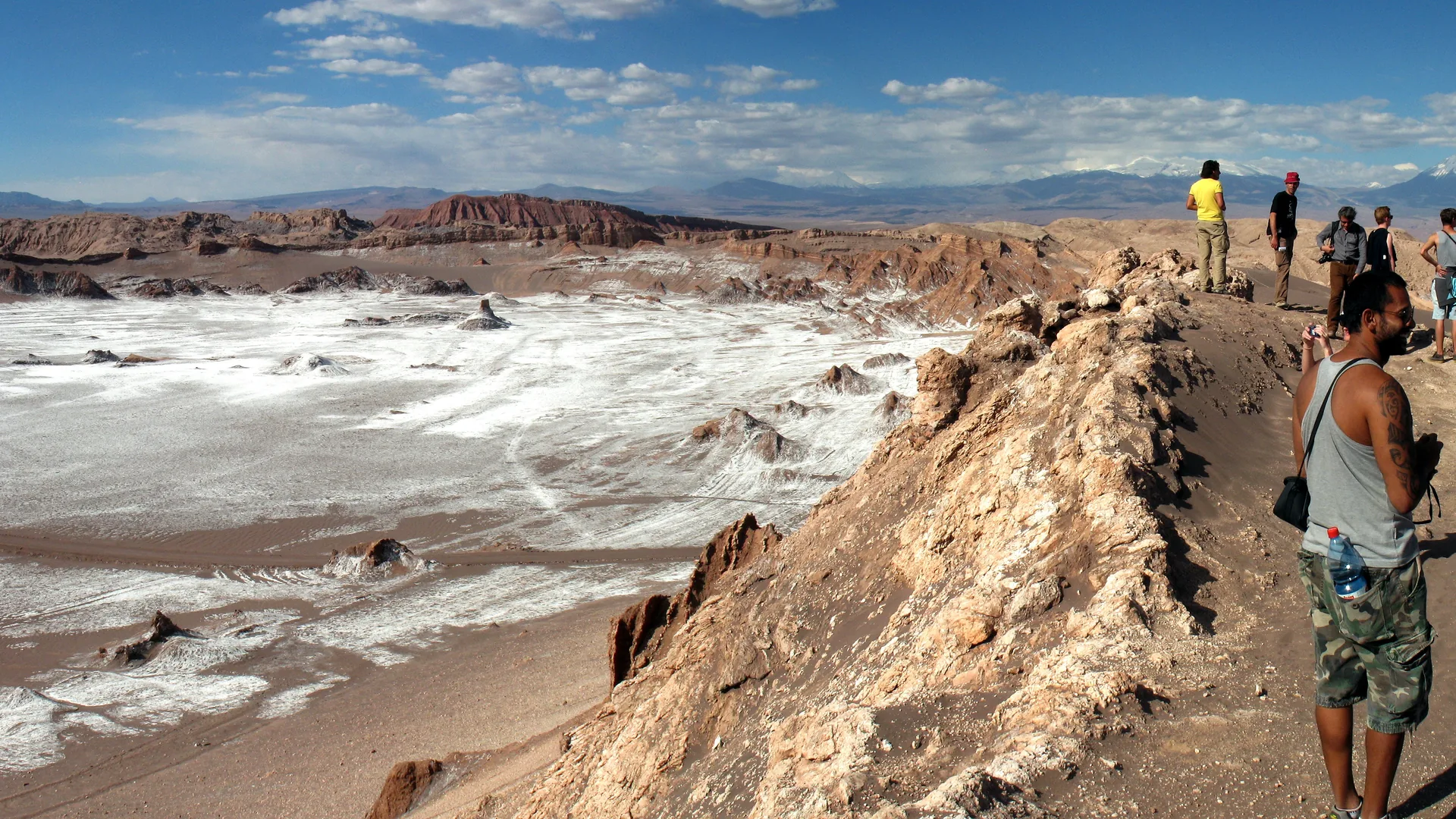
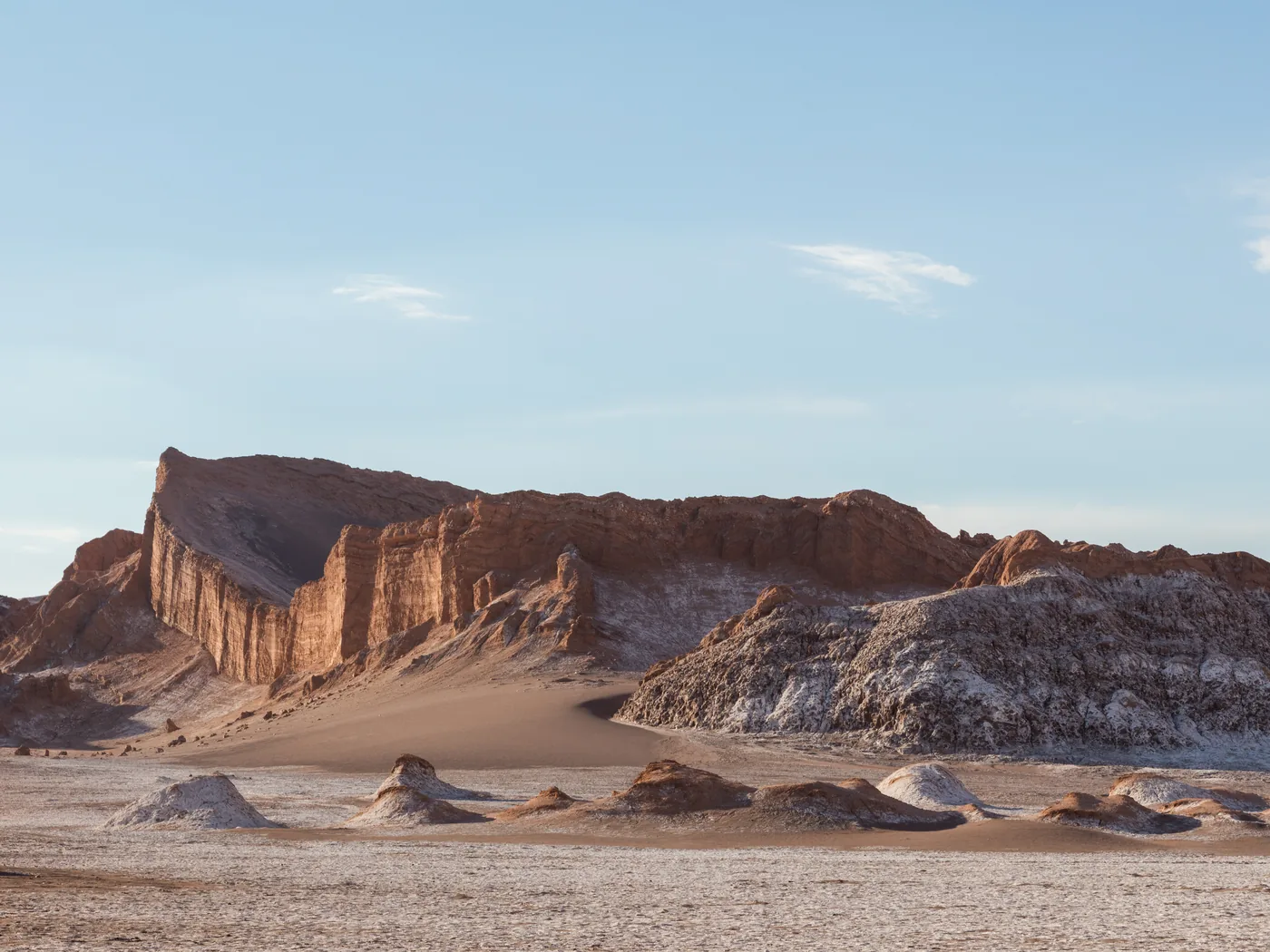
The Valley of the Moon
A short drive from San Pedro, this valley of wind-sculpted rock, salt caverns and dunes turns gold and violet at sunset. Its lunar, almost Martian landscape is the classic Atacama afternoon.
- Piedras Rojas
Red rocks & altiplanic lagoons
The signature full-day: the red-stained rocks of Piedras Rojas, the high Miscanti and Miñique lagoons beneath the volcanoes, the Salar de Atacama and Andean villages — the desert's greatest hits in one long, high-altitude day.
- Salar de Atacama
Salt flats & flamingos
Chile's largest salt flat spreads to the horizon, its lagoons home to Andean, Chilean and James's flamingos feeding in the brine. At Laguna Chaxa and the altiplanic lakes the birds and the mirror water are unforgettable.
- Stargazing
The desert night sky
After dark the real show begins. On a guided stargazing night, telescopes and a guide open up the Milky Way, planets and southern constellations in some of the clearest skies on earth — a highlight of any Atacama visit.
- Lagunas
Floating in the brine lagoons
The hidden Baltinache lagoons and the salty Cejar lagoon let you float effortlessly in dense brine, ringed by white salt crust and desert light — a surreal, refreshing counterpoint to the geysers and heights.
Touring from San Pedro de Atacama
Touring from San Pedro de Atacama
The Atacama's sights are spread across huge distances and high altitudes, so almost everyone explores on guided tours out of San Pedro. Here's how it works.
San Pedro is the base
Nearly every tour starts and ends in San Pedro de Atacama, the oasis town most people reach via Calama airport (about an hour away). From San Pedro you can string together geysers, valleys, salt flats and stargazing over a few days without changing base.
Why go guided
The distances are long, the roads remote, and the altitudes serious — El Tatio is above 4,000 metres. Guided tours handle the driving, the very early starts, the park fees and the safety, and add the geology and astronomy that make each stop make sense. It's the standard way to see the desert.
Half-days & full-days
Trips split into half-days (Valle de la Luna, stargazing, the nearby lagoons) and long full-days (El Tatio geysers, Piedras Rojas and the altiplanic lagoons). Most visitors mix two or three over a stay. Check each option's timing, inclusions and what to bring when you book.
Altitude & extremes
San Pedro sits at ~2,400 m and tours climb far higher, so acclimatise for a day before the high trips, go slowly, and drink plenty of water. Pack for extremes: freezing pre-dawn starts and strong midday sun in the same day, plus sunglasses, sunscreen and warm layers.
The Atacama, in pictures
The Atacama, in pictures
Lagoons and volcanoes, the geysers of El Tatio, the Valley of the Moon and the desert night sky.
Tour options & what's included
Tour options & what's included
| Option | What it includes | Good to know |
|---|---|---|
| Half-day tour | Transport, guide, one sight (Luna, lagoons) | Easy add-ons around your other days |
| Full-day tour | Transport, guide, meals; geysers or Piedras Rojas | Long, high-altitude, and the desert's best |
| Stargazing night | Transport, telescopes, guide, hot drinks | Small groups; skies among the world's clearest |
| Multi-day / Uyuni | Several days, often crossing to Bolivia's salt flats | For combining Atacama with Salar de Uyuni |
Ways to explore the Atacama
Find an Atacama tour for your dates
Every option below is bookable through GetYourGuide, with live availability and the final price shown in your own currency before you pay.
Planning your visit
Planning your visit
Give it a few days
The Atacama isn't a one-day stop: the sights are spread out and the best of them — geysers, Piedras Rojas, stargazing — barely overlap. Plan three or four nights in San Pedro so you can space the early starts and the high-altitude days comfortably.
Acclimatise, then climb
San Pedro is already at 2,400 m and tours go far higher, so take your first day gently, drink plenty of water, and save El Tatio and the altiplanic lagoons for once you've adjusted. Anyone with altitude concerns should check with a doctor first.
Pack for extremes
A single day can swing from freezing pre-dawn geysers to fierce midday sun. Bring warm layers and a hat and gloves for early starts, plus strong sunscreen, sunglasses and a sun hat for the day, and always more water than you think.
Go guided, and space the early starts
Guided tours handle the long remote drives, the 4am departures and the park fees, and add the context that brings the geology and the sky to life. Don't stack two dawn tours back to back — alternate big days with the gentler half-days and the stargazing nights.
Booking flexibility
The listings offer free cancellation up to 24 hours before and, on many options, reserve-now-pay-later — so you can lock in departures without paying today and still adjust if your plans or the altitude change.
Planning your Atacama days
Planning your Atacama days
GEO/FAQ
Atacama tour questions
What is the Atacama Desert?
The Atacama is a high desert in northern Chile — the driest non-polar desert on earth, set between the Andes and the coastal range. Around the oasis town of San Pedro de Atacama it holds the El Tatio geysers, the Valle de la Luna, the vast Salar de Atacama salt flat, altiplanic lagoons with flamingos, and some of the clearest night skies in the world.
Where do I base myself?
San Pedro de Atacama is the base for almost everything — a small oasis town at about 2,400 m, reached via Calama airport roughly an hour away. Nearly all tours start and end in San Pedro, so you can string together geysers, valleys, salt flats and stargazing over a few days without changing hotels.
How many days do I need?
Plan on three or four nights. The sights are spread over long distances and the marquee tours — El Tatio, Piedras Rojas, stargazing — hardly overlap and often start before dawn, so you'll want time to space them out and to acclimatise to the altitude.
What should I know about the altitude?
San Pedro is at ~2,400 m and tours climb well above 4,000 m at El Tatio and the altiplanic lagoons, so take your first day gently, drink plenty of water, and leave the highest trips until you've adjusted. If you have any altitude or heart concerns, check with a doctor before travelling.
Is the Atacama really that good for stargazing?
Yes — it's one of the best places on earth for it. The combination of high altitude, extremely dry air and very little light pollution gives more than 200 cloudless nights a year, which is why major observatories like ALMA are here. A guided stargazing night with telescopes is a highlight of most visits.
Can I combine it with the Uyuni salt flats?
Yes — multi-day tours cross from San Pedro into Bolivia to the Salar de Uyuni, the world's largest salt flat, usually over three or four days. Each option's route, inclusions and live price are shown in the booking widget, and the listings offer free cancellation up to 24 hours before.
Still deciding which tours, or which days?
Leave your email and roughly when you're travelling — we'll send a short rundown of how the Atacama tours from San Pedro compare, what's included, and how to plan for the altitude.